Ink
Ink


 Machines


 Cartridges


 Studio supplies


 Power & batteries


 Aftercare


 Traditional tattooing


 Apprentice


 Piercing & jewellery


 PMU supplies


 New arrivals
 Sale
Sale
 Gift vouchers
 Shop all


 May 30, 2023
-
2 years ago
May 30, 2023
-
2 years ago
Opening your own tattoo studio can be an exciting and rewarding venture, but it is also a significant financial investment. There are numerous factors to consider when budgeting for your new tattoo business, from the equipment to the supplies, rent, licences and permits, labour costs and marketing expenses.
Read more about the costs of opening a tattoo shop here.
What is a navel piercing?
A navel piercing is an aesthetic body modification that involves the insertion of jewellery through the skin and underlying tissue surrounding the belly button.
Types of belly button piercings
Belly button piercings are typically placed through the top fold of skin. The suitability of alternative placements, such as the sides or lower navel, can vary depending on individual anatomy.
When considering a belly button piercing, it’s crucial to consult with a professional piercer who can assess your specific anatomy and advise on the most suitable placement for you. The correct placement will ensure a safe and successful piercing experience tailored to your unique body structure.
Choosing the perfect piece of navel jewellery
Opting for jewellery made from high-quality materials such as implant-grade stainless steel, medical-grade titanium, or solid gold is key. These metals minimise the risk of irritation or allergic reactions.

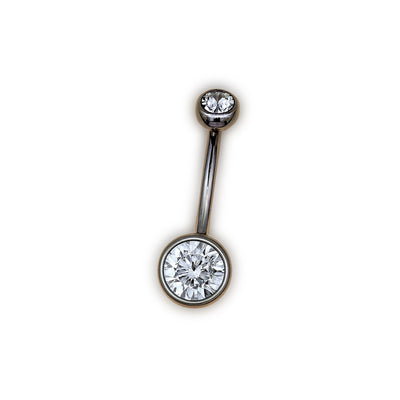
The most common type of piercing jewellery for belly buttons is a curved barbell. These barbells are ideal as they conform to your navel shape and fit comfortably in the piercing area.
Belly jewellery comes in a multitude of styles and designs. Popular choices include dangle jewellery, charms, hearts, as well as studs with bezel-set gems or pearls. For those who want to make a bold statement, there are also eye-catching options like belly rings featuring dangling pendants and unique designs.
What happens during the belly button piercing process?
The piercing procedure typically takes around 10 minutes and involves making a small incision in the skin to insert the jewellery. All piercings involve some degree of discomfort, but it should never be unbearable or overly painful.
Once you’re happy with the piercing placement, your piercer will prepare your skin by cleaning it with antiseptic.
Depending on your skin type, the piercing will either be clamped or done freehand. Clamps keep the area taut for precise placement, while the freehand technique can help prevent bruising. Shop all the necessary piercing equipment here.
Once the jewellery is inserted, your piercer will check that it’s secure before cleaning up the area. They’ll also provide you with aftercare instructions and further healing advice.
Aftercare advice for a belly button piercing
Aftercare is essential to ensure your navel piercing heals properly. Cleaning the area regularly with a saline solution can help prevent bacteria build-up, which can lead to infection. It’s also important to avoid touching or fiddling with the jewellery as this could cause irritation or further damage to the piercing site.

To ensure a smooth healing process, avoid activities like swimming and using hot tubs. Steer clear of fake tan or applying too many lotions to the pierced area. Be cautious with clothing and other items such as zips or buttons that could put pressure on the piercing.
How long do navel piercings take to heal?
The healing time for navel piercings can vary from person to person, but on average, most belly button piercings take around six to twelve months to heal completely. During this period, the body works to close the wound and develop a protective layer of skin around the jewellery.
It’s essential to follow the aftercare instructions provided by your piercer and take extra care of your piercing during the healing period. Clean it regularly with a saline solution, avoid contact with rough fabrics or tight clothing, and refrain from swimming in pools or hot tubs until it has fully healed.
Bringing the belly piercing trend back
Navel piercings can be a fun way to express your individuality. However, it’s important to select the right jewellery and take extra care during healing for the best results.
To ensure a smooth experience, always seek the services of a professional piercer and follow their aftercare instructions. With careful consideration and patience, you’ll have a beautiful belly button piercing to be proud of.
FAQs
Individuals with outie belly buttons may face challenges when it comes to getting their navel pierced. If your body shape doesn’t lend itself well to belly button piercings, a professional piercer may advise against it to prevent jewellery migration and ensure safety.
A floating navel piercing differs from a regular piercing in that it uses a flat disc or small bead at the bottom. This design allows the lower part of the jewellery to sit deeper within the navel so that it’s barely visible, accommodating different anatomical structures.
Shop product