Ink
Ink


 Machines


 Cartridges


 Studio supplies


 Power & batteries


 Aftercare


 Traditional tattooing


 Apprentice


 Piercing & jewellery


 PMU supplies


 New arrivals
 Sale
Sale
 Gift vouchers
 Shop all


 March 28, 2024
-
2 years ago
March 28, 2024
-
2 years ago
Getting really good at doing line work tattoos is both hard and exciting. If you're learning to be a tattoo artist or you just love tattoos, understanding how to make those smooth, sharp lines can seem tough.
There are many things to watch out for, like making sure your lines are all the same thickness, not making the ink spread out under the skin, and keeping your hand steady. It takes a lot of tattoo practice and careful attention to get it right, but it's all about taking it step by step and learning from each try. So, let's discuss how to get those lines as sharp as your skills.
What is a line work tattoo?
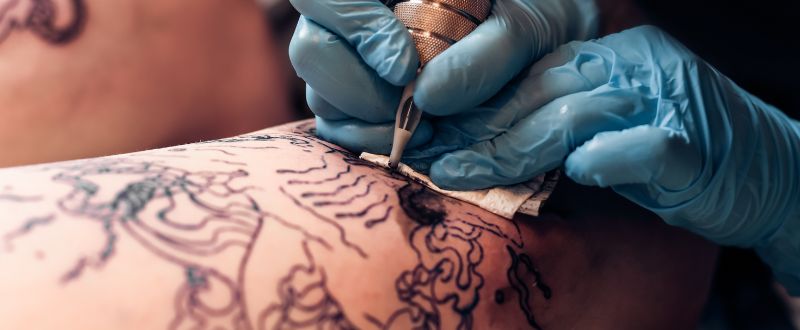
A line work tattoo is a style of tattooing that emphasises clean, crisp lines to create designs, often without shading or colour fill. This technique focuses on outlines and minimalistic patterns, resulting in artwork ranging from simple geometric shapes and delicate florals to intricate illustrations and complex symbols. The simplicity of linework tattoos makes them visually striking and suitable for various aesthetic preferences.
Line types and uses
- Single needle lines: Fine lines for intricate details and delicate designs such as facial features, tiny symbols, or fine text. Perfect for realistic tattoos and minimalist art.
- Bold lines: Thick lines used to define shapes clearly and make a statement, suitable for larger tattoos or styles that require strong outlines.
- Shading lines: Lines varying in thickness and spacing to create depth without traditional shading.
- Dotted lines: Dotwork used for textured effects, gradients, and subtle shading in geometric or 3D designs.
- Geometric lines: Straight, precise lines to create geometric shapes and patterns, often in sacred geometry tattoos.
- Continuous line: A single, unbroken line creating an entire design, emphasising fluidity and connection.
- Abstract lines: Lines used for abstract or surreal tattoos to convey emotions, concepts, or personal narratives.
Essential equipment
Needles
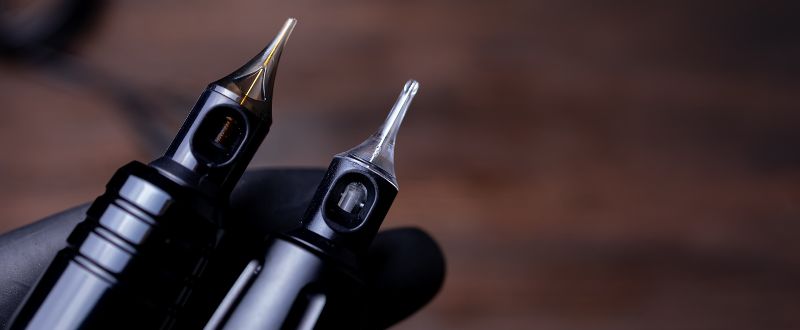
When choosing needles for line work tattoos, think about the detail you need. Fine lines require single needles or tight groupings, giving you sharp, precise results. For thicker lines, use larger groupings. The right tattoo needle ensures your tattoo looks clean and lasts longer.
Tattoo machines: Coil vs. rotary
You'll find two main types of tattoo machines: coil and rotary. Coil machines are great for detail, giving you control over intricate line work with their characteristic buzz. Rotary machines are quieter and smoother, good for both lines and shading and gentler on the skin. Your choice depends on what feels right for you and the tattoo you're doing.
Ink considerations
For line work, black ink is often used for its bold look, but you can choose from many colours. The type of ink affects how it looks on the skin and how long it lasts, so pick the best one for your design and skin type.
Techniques for mastering line work tattoo
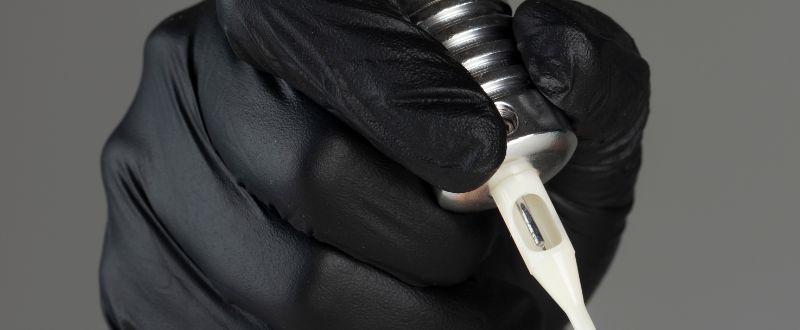
Mastering line work in tattooing requires practice, patience, and a deep understanding of various techniques. You can follow these strategies to help you improve your line work skills:
1. Understanding and adjusting your equipment
- Needle knowledge: Be familiar with various needle configurations and their specific uses. Round liners are great for fine lines, while magnum needles can produce thicker lines.
- Machine settings: Adjust your tattoo machine's speed and voltage to suit the type of line you're working on. Higher voltage is for thicker lines and lower is for finer lines.
2. Grip and machine control
Find a comfortable yet firm grip on your tattoo machine, which allows for greater control and steadier lines. Practice moving your hand and arm as a single unit to achieve smoother, more consistent lines.
3. Practice makes perfect
Regularly practise drawing straight lines, curves, and transitions between different line thicknesses on practice materials like synthetic skin. Master the correct angle and pressure to apply ink evenly and consistently.
4. Skin stretching techniques
Use your non-dominant hand to stretch the skin tightly in the tattoo area to avoid jagged or inconsistent lines.
5. Line thickness and tapering
- Voltage adjustments for thickness: Adjust your machine's voltage to suit the line thickness. Higher voltage can create bolder lines.
- Tapering lines: Smoothly connect lines or create sharp ends and points. Essential for intricate designs.
6. Handling corners and curves
Approach corners as two separate lines meeting at a point. Stop at the corner and start the next line to ensure sharp, precise angles.
7. Long lines technique
For long, uninterrupted lines, move your entire arm, hinging at the elbow, rather than just the wrist. This helps maintain consistent pressure and speed.
8. Continuous learning and feedback
Always be open to learning new techniques and receiving feedback from other artists. Staying updated will enhance your skills.
Design considerations for line work tattoos
Several considerations are crucial to ensure your line work tattoos look stunning and stand the test of time:
1. Simplicity and clarity
Keep designs simple and clear. Overcomplicating can lead to a muddled appearance, especially as the tattoo ages.
2. Flow and placement
Consider the placement on the body and how it flows with natural lines and contours. Well-placed tattoos accentuate body curves or muscles.
3. Scalability
Ensure designs maintain integrity over time. Fine lines may blur as skin ages, so allow for slightly thicker lines or adequate spacing.
4. Contrast and negative space
Play with line thickness and negative space to create visual interest and define the overall look of the tattoo.
Common mistakes while doing line work tattoos
Even experienced artists can encounter challenges. Be aware of these common mistakes:
1. Inconsistent line thickness
Caused by uneven pressure, incorrect needle depth, or unsteady hand speed.
2. Blowouts
Ink spreads beneath the skin outside the intended line path, often from inserting the needle too deeply.
3. Uneven line quality
Patchy or skipped areas from improper speed or ink flow, requiring additional passes over the skin.
4. Poor planning and placement
Not considering body contours can distort designs and affect longevity.
5. Overworking the skin
Going over the same area too often causes trauma, swelling, and potential scarring.
6. Holding the tattoo machine incorrectly
Improper grip reduces control and line precision.
7. Moving your hands too fast or slow
Too fast produces faint lines, too slow deposits excess ink. Balance is key.
Learning line work tattoos
Mastering line work tattoos is a journey of learning, growth, and fun. Every line tells a story. Keep practising, stay patient, and enjoy the ride—your next line could be your masterpiece.
Shop product