Ink
Ink


 Machines


 Cartridges


 Studio supplies


 Power & batteries


 Aftercare


 Traditional tattooing


 Apprentice


 Piercing & jewellery


 PMU supplies


 New arrivals
 Sale
Sale
 Gift vouchers
 Shop all


 March 11, 2026
-
7 months ago
March 11, 2026
-
7 months ago
Picking up the wrong tattoo machine for lining or shading is one of those mistakes you feel immediately in your work. The lines come out inconsistent. The ink does not sit right. And no matter how much you adjust, something feels off.
The technical reality is actually the opposite: lining requires a longer stroke (3.8mm+) to provide the "bite" needed to punch through skin resistance for clean, one-pass lines. Shading performs best with a shorter stroke (2.5mm–3.5mm), which hits the skin more softly to allow for gradual blending and smooth gradients without overworking the tissue. Using the wrong setup, like a short stroke for bold lines, often results in poor ink saturation and excessive skin trauma.
This article breaks down the key differences between a tattoo machine for lining and a shader, looks at the machines Magnum Tattoo Supplies carries that suit each role, and helps you figure out which setup is right for where you are in your tattooing journey.
Lining vs Shading: What Actually Changes Between Machines
The difference between a tattoo machine for lining and one built for shading is not just about voltage or needle choice. It starts with stroke length.
Stroke Length Is Everything
Matching your stroke length to your technique is essential for achieving professional results and protecting the skin’s integrity. While it may seem counterintuitive, the "hit" of the needle changes significantly based on the distance it travels.
For clean, bold linework, a longer stroke (typically 3.8mm to 5.0mm) is the professional standard. A longer stroke allows the needle to retract further into the tube and gain more momentum before hitting the skin. This provides the necessary "bite" to punch through resistance and deposit ink in a single, solid pass. This momentum ensures the needle doesn't bounce, which is the primary cause of shaky or faint lines.
However, shading works oppositely. When building soft gradients or smooth black-and-grey transitions, a shorter stroke (typically 2.5mm to 3.5mm) is far more effective. Because the needle moves a smaller distance, it hits the skin with much less force and at a faster frequency. This softer impact allows you to layer pigment gradually and create seamless blends without overworking the tissue or creating harsh, accidental edges.
Speed, Voltage, and How They Connect
Voltage and speed are the "engine" of your tattoo machine, but they must be balanced with your stroke length to work effectively. Generally, a machine for lining runs at a higher voltage to maintain the power needed for crisp, one-pass lines. Most artists set their liners between 7V and 9V, depending on the needle grouping.
Shaders, by contrast, typically sit lower, often between 5V and 8V. This reduced speed allows for a controlled, rhythmic motion that is essential for building tonal gradients and smooth blending without chewing the skin.
Getting this balance wrong leads to immediate technical issues. Running a shader at high speeds often results in "patchy" or "peppered" shading rather than smooth transitions. Conversely, running a liner too slowly causes the needle to "drag" through the skin, resulting in shaky, widened, or inconsistent lines.
Technical Comparison: Lining vs Shading
|
Feature |
Lining (Outlines & Detail) |
Shading (Blending & Packing) |
|
Stroke Length |
Long (3.8mm – 5.0mm) |
Short (2.5mm – 3.5mm) |
|
Speed |
Higher RPM for clean entry |
Lower for controlled blending |
|
Typical Voltage |
7V to 9V |
5V to 8V |
|
Needle Type |
Round Liner (RL) |
Magnum (M1) / Round Magnum (RM) |
|
Primary Use |
Bold outlines and fine detail |
Gradients and soft tonal work |
|
Ideal Machine |
Bishop Power Wand Advanced Liner (5.0mm) |
Dragonhawk Fold Pro (2.4mm) |
The Best Tattoo Machines for Lining at Magnum
A good tattoo machine for lining is precise, consistent, and provides the necessary "bite" to drive ink in a single pass. Here are the Magnum tattoo machines that deliver the high-torque, long-stroke performance required for clean outlines.
Bishop Power Wand Advanced Liner (5.0mm)
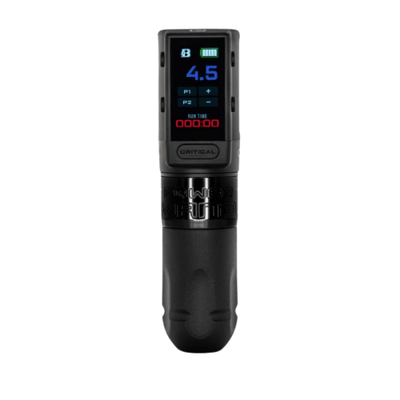
The Bishop Power Wand 5.0 Liner stands as the pinnacle of lining technology, specifically engineered for artists who demand maximum torque and a hard-hitting stroke. Featuring a fixed 5.0mm stroke length, this machine is designed to push even the largest needle groupings into the skin with ease, making it a "beast" for bold traditional work and crisp, single-pass lines. Its specialised motor is calibrated to provide a snappy, forceful hit that ensures precision without compromising on speed or efficiency.
Beyond its raw power, the Power Wand is a favourite for its exceptional ergonomics and versatility. The machine features a sleek, matte black aircraft aluminum body that is both lightweight and perfectly balanced, reducing hand fatigue during long, demanding projects. Artists also value the Advanced Full Set because it transitions seamlessly from a traditional RCA setup to a state-of-the-art cordless experience using the included Critical Connect batteries. This hybrid capability, combined with a magnetic backplate that allows the batteries to sit flush, gives artists the freedom of movement they need without sacrificing the steady, hard-hitting performance Bishop is known for.
Ambition Soldier Max Wireless Tattoo Machine
The Ambition Soldier Max is a top-tier choice for artists who prioritise power and consistency. Running on a coreless motor at 13,000 RPM, it provides the high-torque output necessary for bold, definitive lining and efficient colour packing. This consistent power ensures that even at higher voltages, the machine remains stable and precise.
It ships with two batteries (2400 mAh and 1800 mAh), providing up to 10 hours of combined runtime for long sessions. The 4.0mm-stroke cam is specifically suited for driving clean, one-pass lines, while the HD screen keeps your voltage and battery levels clear at a glance. If you need a heavy-duty liner that keeps pace with back-to-back sessions, the Soldier Max is a formidable contender.
Machines That Excel as Shaders
Shading is where stroke length really matters. The machines below are strong all-rounders that shine when you dial down the stroke for smooth colour work and seamless blending.
Dragonhawk Fold Pro Wireless Pen
The Dragonhawk Fold Pro is one of the most versatile machines on the shelf, and at its shorter stroke settings, it is an excellent choice for shading. With seven adjustable stroke lengths ranging from 2.4mm to 4.2mm, you can dial it down to 2.4mm or 3.0mm to achieve the soft, "brush-like" impact required for smooth gradients and delicate tonal work.
The built-in LED screen provides real-time voltage and battery readouts, while the 1500mAh battery offers 4 to 6 hours of consistent performance. It also includes an RCA connector, ensuring you can switch to a wired setup if the battery runs low mid-session. Practical and adaptive, it allows you to transition from soft shading to colour packing in a single session. Special editions, such as the Year of the Snake and Year of the Dragon variants, are also available for artists wanting a unique studio aesthetic.
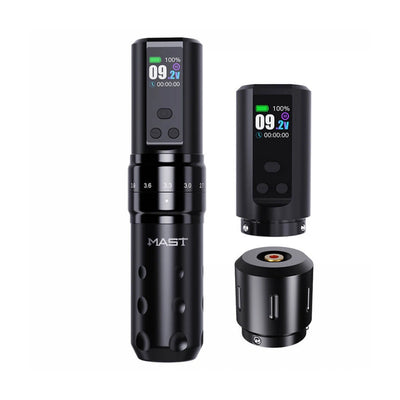
Mast Fold 2 Pro Wireless Tattoo Machine
The Mast Fold 2 Pro is a standout performer for shading and smooth tonal transitions. Powered by the MCore-C1 motor, it operates with the quiet, vibration-free consistency needed for delicate work. Its adjustable stroke range, specifically when dialled down to the 2.4mm to 4.2mm settings, allows for the soft impact required to build seamless gradients without overworking the skin.
The colour display makes it easy to monitor your voltage at a glance, while the 2000mAh battery provides 5 to 7 hours of working time. With its rotatable grip for quick needle depth adjustments and a motor built for precision, the Fold 2 Pro is ideal for artists who need a "soft touch" for realism, black-and-grey, and intricate blending.
Ambition Lutin RCA Tattoo Machine
For artists who prefer a wired setup, the Ambition Lutin is a reliable option for shading and detailed colour work. Built from aircraft-grade aluminium alloy, it is compact and light, which helps reduce hand fatigue during the long, repetitive passes required for smooth blending. Inside sits a custom brushless motor that minimises vibration, allowing for the steady hand needed to create seamless tonal transitions.
The machine includes a 3.4mm cam, which provides the shorter, softer stroke ideal for building up layers of ink without the aggressive "bite" of a dedicated liner. This makes it an excellent choice for fine shading and soft-edge work. Additionally, its design supports a wireless battery conversion, allowing the machine to grow and adapt to your workspace over time.
When to Use Each Machine
Not every session calls for the same setup, and knowing when to reach for your liner versus your shader saves you time and keeps your work consistent. This section breaks down the scenarios where each machine type earns its place in your hand.
Reach for a Dedicated Tattoo Machine for Lining When
-
You need sharp definition: Essential for fine line work, geometric designs, or intricate details where clarity is the priority.
-
You are working in bold styles: Perfect for traditional or neo-traditional work where thick, consistent outlines anchor the entire piece.
-
You need maximum "bite": A long-stroke liner provides the momentum required to punch through skin resistance in a single, solid pass.
-
Consistency is key: Best for long, continuous lines where you need a machine that won't "bounce" or snag throughout the full motion.
Use a Shading-Focused Setup When
-
You are building soft gradients: Ideal for smooth transitions, delicate tonal work, or "airbrushed" effects.
-
You are layering pigment: A short-stroke setup hits the skin softly, allowing you to pass over the same area multiple times without overworking the tissue.
-
You are working in realism: Best for painterly or realism styles, where blending and diffusion are more important than hard edges.
-
You need a softer impact: Choose this when you want the needle to "brush" the skin rather than punching through with aggressive force.
When One Machine Can Do Both
If you are in the early stages of your setup or working with a tighter budget, a versatile adjustable machine can handle both tasks. The Dragonhawk Fold Pro and Mast Fold 2 Pro both cover shading at shorter strokes and lining at longer ones. While you won't get the same specialised "bite" as a dedicated long-stroke liner or the ultra-soft touch of a purpose-built shader, the flexibility is a practical trade-off for most styles until you are ready to invest in separate machines for each role.
Needle Choice Completes the Setup
The right tattoo machine for lining will only perform as well as the needles you put in it. Round Liner (RL) cartridges are the standard starting point. Smaller groupings like 3RL and 5RL are suited to fine detail and delicate work, while 9RL and 14RL produce the bold, punchy outlines characteristic of traditional styles.
For shading, curved magnums and round magnums are the workhorses. These distribute ink over a wider surface area with each pass, making blending faster and more consistent. Options like Magnum Premium Cartridges and Peach Tattoo Cartridges cover the full range of configurations you need for both techniques.
Matching your needle to your machine and stroke length closes the loop. A dialled-in tattoo machine for lining, paired with the correct RL configuration, will consistently outperform a high-end machine running the wrong needle type.
Final Recommendation
By this point, you understand how lining and shading machines differ, and which setups suit each task. Now it comes down to matching the right machine to where you actually are in your career and what your work demands day to day.
For Apprentices and Artists Building Their First Setup
Start with an adjustable wireless pen. The Dragonhawk Fold Pro or the Mast Fold 2 Pro provides enough stroke range to handle shading at the shorter settings (2.4mm–3.0mm) and lining at the longer ones (3.8mm–4.2mm). This allows you to learn the mechanical feel of both tasks without needing to invest in two separate machines from day one.
For Artists Ready to Separate Their Setup
Once you have identified your style, keep a longer-stroke machine (4.0mm+) specifically configured as your tattoo machine for lining to ensure sharp, one-pass results. For shading, move to a setup with a shorter or medium stroke (3.0mm–3.5mm). The Ambition Soldier Max and Bishop Power Wand Advanced 5.0 Liner are powerful, high-torque options that excel at driving bold lines, while the Ambition Lutin (using its 3.4mm cam) is a reliable choice for smooth, controlled shading and blending.
The Core Rule
A tattoo machine for lining needs a longer stroke to provide the momentum and "bite" required to punch through skin resistance for crisp lines. A shader performs best with a shorter stroke, allowing for a softer impact that builds tonal gradients gradually without trauma. Get the stroke length right for the task, and the quality of your work will immediately reflect it.
Conclusion
The difference between a tattoo machine for lining and one set up for shading comes down to stroke, speed, and skin interaction. You need a longer stroke and higher torque for clean, one-pass outlines, and a shorter, more controlled stroke for smooth, gradual tonal work.
Every machine in this guide is available at Magnum Tattoo Supplies, stocked and ready to ship. If you are unsure which direction to take, start with adjustable machines to explore different stroke lengths and build your setup as your style develops. The right configuration removes the mechanical variables, letting your technique stay the focus of every session.
FAQs
What is the difference between a liner and a shader tattoo machine?
A liner uses a longer stroke and higher voltage to provide the "bite" needed for sharp, one-pass outlines. A shader uses a shorter stroke and lower voltage to hit the skin more softly, allowing for smooth blending and gradual tonal gradients without overworking the tissue. Understanding this balance is the key to choosing between solid definition and soft transitions.
Can you use the same tattoo machine for lining and shading?
Yes, with some machines. Many modern adjustable rotary pens allow you to switch stroke length and voltage to handle both tasks. That said, a dedicated liner and dedicated shader will give you better control and cleaner results as your work becomes more complex.
What voltage should I run a lining tattoo machine at?
Most artists run a liner at 7-9 volts, though this varies depending on the machine and needle configuration. Always test on synthetic skin before starting a session and adjust from there.
Can a rotary machine be used for lining?
Yes. Modern rotary pen machines are excellent for lining, though professionals typically prefer a setting over 3.5mm for more "bite." This extra length provides the momentum needed for sharp, consistent outlines in a single pass. Many artists now use rotary pens exclusively, and much of the cleanest linework in the UK is produced using high-torque rotary machines.
What needles should I use for lining tattoos?
Round liner (RL) cartridges are the standard choice. Use smaller groupings like 3RL or 5RL for fine detail, and larger groupings like 9RL or 14RL for bold traditional outlines. Products like the Kwadron Liner Essential Pack offer a solid range of RL configurations to start with.
Shop product