Ink


 Machines


 Cartridges


 Studio supplies


 Power & batteries


 Aftercare


 Traditional tattooing


 Apprentice


 Piercing & jewellery


 PMU supplies


 New arrivals
 Sale
 Gift vouchers
 Shop all


 September 04, 2026
-
1 month ago
Estimated reading time: 15–20 minutes
Choosing a rotary tattoo machine is one of the most important equipment decisions a tattoo artist can make. The right machine should complement your technique, feel comfortable during long sessions and provide the level of control needed for the styles you tattoo most often. Today's rotary machines offer far more choice than simply selecting between a wired or wireless model. Stroke length, motor response, machine weight, grip design, battery configuration, needle compatibility and overall ergonomics can all influence how a machine feels in the hand and how it performs during a session.
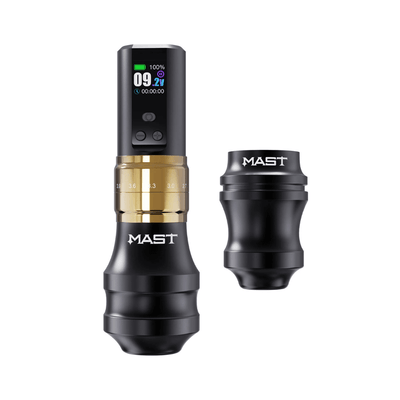
This guide explains the key factors to consider when choosing a professional rotary tattoo machine in the UK, from the fundamentals of rotary technology through to stroke length, machine type, power options and everyday usability. Throughout the guide, examples from the current Magnum Tattoo Supplies range are used where they help illustrate different approaches to machine design. These include the Dragonhawk/Mast Fold 2 Pro, AVA EP7+ and Bishop Power Wand, alongside the wider range of rotary machines available from Magnum Tattoo Supplies.
Key Takeaways
- Rotary tattoo machines use an electric motor to drive the needle rather than electromagnetic coils.
- Pen-style rotary machines are popular because they offer a familiar grip shape, straightforward operation and compatibility with cartridge systems.
- Stroke length is an important consideration because different stroke lengths can suit different tattooing techniques.
- Adjustable-stroke machines offer greater flexibility when one machine needs to cover multiple techniques.
- Machine weight and balance can have a significant effect on comfort during longer tattoo sessions.
- Wireless machines provide greater freedom of movement, while RCA machines can offer a straightforward wired setup.
- Battery life, charging options and spare battery availability are important considerations when choosing a wireless machine.
- Cartridge compatibility should always be checked before purchasing a machine or grip.
- A machine should be selected according to the artist's technique rather than simply choosing the most powerful or most expensive option.
- The best rotary tattoo machine is the one that complements the artist's hand, preferred techniques and studio workflow.
At a Glance
|
Buying Factor |
What to Look For |
Why It Matters |
|
Machine type |
Pen, direct-drive or other rotary format |
Determines handling and mechanical feel |
|
Stroke length |
Short, medium, long or adjustable |
Influences machine response and suitability for different techniques |
|
Stroke flexibility |
Fixed or adjustable stroke |
Determines how easily you can adapt the machine's response to different techniques |
|
Motor |
Consistent output and suitable response |
Helps provide predictable needle movement |
|
Weight |
Comfortable for your working style |
Important during longer sessions |
|
Balance |
Well-distributed weight |
Can reduce unnecessary hand fatigue |
|
Power |
Wireless, RCA or both |
Determines how you prefer to work |
|
Battery |
Suitable runtime and charging options |
Important for wireless sessions |
|
Grip |
Diameter, shape and adjustment |
Affects comfort and control |
|
Cartridge compatibility |
Universal cartridge system where required |
Allows easy cartridge changes |
|
Adjustability |
Stroke, needle depth and other controls |
Provides greater control over setup |
|
Maintenance |
Simple cleaning and care requirements |
Supports reliable long-term use |
Who This Guide Is For
This buyer's guide is designed for professional tattoo artists, studio owners, and apprentices looking to upgrade or select their next rotary tattoo machine. Whether you are transitioning from traditional coil machines to modern wireless pens, looking for a versatile multi-stroke machine, or seeking a specialised high-performance flagship device, this guide cuts through technical jargon to help you make an informed decision based on your tattooing style, ergonomic needs, and studio budget.
Why Trust This Guide?
This guide has been created using current product specifications, manufacturer information and practical considerations relevant to professional tattoo machine selection. Machine specifications and availability can change, so individual product pages should always be checked before purchasing. Magnum Tattoo Supplies has supported tattoo professionals since 2010, supplying tattoo machines, cartridges, inks and studio equipment to artists across the UK and beyond.
What Is a Rotary Tattoo Machine?
A rotary tattoo machine uses an electric motor to convert rotary movement into the linear movement required to drive a tattoo needle. Unlike a coil machine, which uses electromagnetic coils to move the armature bar, a rotary machine uses a motor and mechanical drive system. This design allows rotary machines to operate with a different mechanical feel and is one reason they have become widely used across modern tattoo studios. Magnum Tattoo Supplies describes rotary machines as offering consistent needle movement, with advantages that can include quieter operation, a relatively straightforward mechanical design and compatibility with modern cartridge systems.
Rotary machines are available in several forms, but pen-style machines have become particularly common. Their shape is designed to resemble the feel of a conventional pen, giving artists a familiar grip and allowing cartridges to be changed quickly.
Many rotary machines have relatively straightforward mechanical designs, although maintenance requirements vary by model and manufacturer. Remember that every machine still requires appropriate cleaning, barrier protection and manufacturer-recommended care.
The Evolution & Advantages of Rotary Tattoo Machines
The tattoo industry has undergone a massive technological shift. While traditional electromagnetic coil machines held supremacy for decades, modern rotary tattoo machines, particularly pen-style wireless units, have become increasingly common in contemporary tattoo studios. Here’s why artists are switching to rotary machines:
- Low Vibration & Reduced Fatigue: Rotary machines utilise electric motors (brushed or brushless) that convert rotational energy into linear needle movement. Lower vibration and a different mechanical feel can make some rotary machines more comfortable for artists during extended sessions, although comfort varies considerably between machines and individuals.
- Seamless Cartridge Integration: Modern rotaries are optimised for needle cartridges, allowing quick twist-and-lock needle swaps during a tattoo without needing multiple set-up machines.
- Consistent Power & Quiet Operation: High-quality DC motors maintain steady torque regardless of skin resistance, running quietly to create a more relaxing studio atmosphere for clients. A well-designed motor and drive system should provide consistent needle movement under the working conditions the machine is designed for.
- Wireless Mobility: Built-in or magnetic lithium battery packs mean no foot switches, RCA cords, or power station cable drag. Wireless battery systems remove the need for a cable between the machine and the power supply, reducing cable management around the workstation.
Rotary vs Coil Tattoo Machines
The rotary versus coil debate is not about one technology being universally superior. Both systems have their own characteristics, and many experienced artists choose equipment according to the type of work they are producing.
Rotary machines are often chosen for their smooth motor-driven movement, relatively quiet operation and straightforward setup. Coil machines use electromagnetic coils and provide a different tactile response that some artists specifically prefer, particularly for certain lining and traditional techniques.
|
Feature |
Rotary |
Coil |
|
Drive system |
Electric motor |
Electromagnetic coils |
|
Typical setup |
Generally straightforward |
Often requires tuning |
|
Noise |
Generally quieter |
Distinctive buzzing sound |
|
Maintenance |
Generally lower |
More regular tuning and maintenance |
|
Cartridge compatibility |
Common on modern pen-style machines |
Depends on machine setup |
|
Feel |
Smooth motor-driven movement |
Distinct punch and feedback |
|
Versatility |
Many machines can cover multiple techniques |
Often configured for specific roles |
For artists who want a versatile machine that can handle multiple techniques with cartridge needles, a rotary is often a practical choice. Artists who specifically value the mechanical feedback and tuning characteristics of coils may prefer to continue using them. There is no requirement to choose one technology exclusively.
Types of Rotary Tattoo Machines
Rotary machines can be broadly categorised by their mechanical design and physical format.
Pen-Style Rotary Machines
Pen-style machines are designed around a cylindrical form that resembles a traditional pen. They are popular because the shape is intuitive and allows the artist to hold the machine in a familiar manner. Many use cartridge needles, making it possible to change configurations quickly during a session.
The Dragonhawk/Mast Fold 2 Pro is an example of a modern adjustable-stroke wireless pen. Its stroke can be adjusted between 2.4 mm and 4.2 mm, allowing artists to alter the machine's mechanical travel for different applications.
Direct-Drive Rotary Machines
In a direct-drive design, the motor's movement is transferred more directly to the needle mechanism. This can create a responsive machine with a more direct mechanical feel. Direct-drive systems can be useful for artists who prefer a more immediate response from the machine. The important point is that direct drive does not automatically make a machine better. The correct choice depends on the artist's hand speed, pressure, technique and preferred machine response.
Adjustable Rotary Machines
Adjustable-stroke machines allow the artist to alter the stroke length rather than being locked to one mechanical setting. This can be useful when one machine is expected to handle different techniques. A shorter stroke may be preferred for certain soft shading applications, while a longer stroke can provide a different response for lining or more saturated work. The Fold 2 Pro is an example of this approach, with seven selectable stroke positions from 2.4 mm through 4.2 mm.
Understanding Stroke Length
Stroke length is one of the most important specifications to understand when buying a rotary machine. It describes the distance the machine's needle mechanism travels during each cycle. It is not the same thing as needle depth or needle protrusion. This distinction matters because adjusting the needle depth does not change the machine's stroke.
In broad terms, shorter strokes are often associated with softer, more controlled applications, while longer strokes can provide a more pronounced response suitable for stronger lining or saturation. However, stroke length should never be treated as a fixed rule for one tattoo style. Artist technique, voltage, hand speed, needle configuration and machine mechanics all interact.
A useful way to approach stroke length is:
|
Stroke Approach |
General Characteristics |
Common Applications |
|
Short (2.4mm – 3.0mm) |
Softer, more controlled response |
Often used for soft shading, blending and controlled detail |
|
Medium (3.5mm) |
Balanced response |
Versatile option for artists working across multiple techniques |
|
Long (4.0mm – 5.0mm) |
More pronounced response and hit |
Often preferred for stronger lining and saturation |
|
Adjustable |
Multiple mechanical responses from one machine |
Useful for artists who regularly switch techniques |
Some machines have fixed strokes, while others allow adjustment. For artists who regularly switch between lining, shading and colour packing, an adjustable machine can reduce the need to maintain several machines for different mechanical responses.
Stroke Length vs Needle Depth
These two specifications are often confused.
- Stroke length is the mechanical distance travelled by the needle mechanism inside the machine.
- Needle depth or needle protrusion refers to how far the needle extends from the cartridge when the machine is set up.
Changing needle depth does not change the machine's stroke. This distinction is important when comparing machines because a machine advertised with a particular stroke should not be assumed to provide the same effect as simply changing the needle protrusion on another machine.
Artists should follow the machine manufacturer's instructions when adjusting needle depth and operating settings.
How Much Stroke Do You Need?
There is no universal stroke length that every tattoo artist should use. Instead, consider the techniques you perform most frequently.
- Fine Line and Detail: Artists working heavily in fine line, delicate detail or controlled shading may prefer a machine with a shorter or more controlled response.
- Black and Grey: Artists working in black and grey often value smooth, controlled movement. A shorter or medium stroke can be useful depending on the artist's hand speed and technique.
- Traditional and Bold Linework: Artists producing strong outlines may prefer a more pronounced machine response, which can make longer-stroke machines attractive.
- Colour Packing: Colour packing often benefits from a machine that provides sufficient response and consistency for the cartridge grouping and technique being used.
The important consideration is not simply choosing the longest or shortest stroke. It is matching the machine's response to your own technique.
Motor Performance and Torque
The motor is the heart of a rotary machine. A good motor should provide consistent movement under the workload you place on it. Artists should be careful about judging motor performance purely by RPM figures. A high RPM number does not automatically mean that a machine is more powerful or better suited to your work.
Torque, motor response, mechanical efficiency and how the machine interacts with the selected cartridge all influence practical performance. When comparing machines, consider how the motor behaves with the needle configurations you use most often rather than focusing on a single specification.
Machine Weight and Balance
Machine weight is particularly important if you tattoo for several hours at a time. A lightweight machine can be easier to manoeuvre, while a heavier machine can sometimes provide a more planted feel. Neither approach is universally better. Balance is just as important as overall weight. A machine that feels well balanced in your hand may require less effort to control than a lighter machine with poor weight distribution.
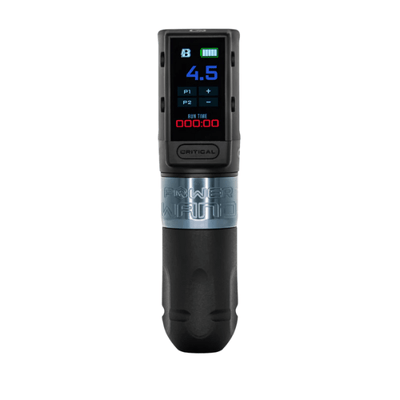
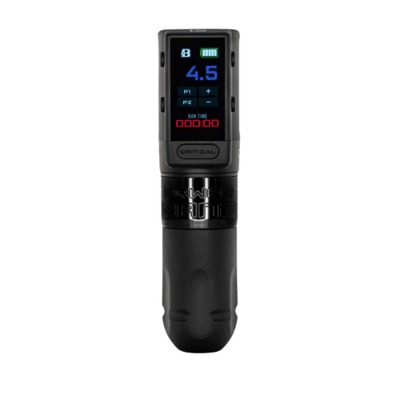
The Bishop Power Wand Advanced, for example, is listed at 142 g with grip and uses an aircraft-grade aluminium body and interchangeable grip. The current Advanced RCA versions are available in different configurations, including 3.5 mm Shader and 5.0 mm Liner versions, with a 4.2 mm Packer also available in the range.
When comparing machines, consider how the machine actually feels in your working grip rather than choosing based on weight alone.
Grip Size and Ergonomics
The grip is the main contact point between the artist and machine. A grip that is too narrow may require excessive pressure, while one that is too large may feel uncomfortable or reduce precision. Consider:
- Grip diametre
- Grip shape
- Grip material
- Adjustability
- Weight
- How the machine sits between your fingers
- How the grip feels during long sessions
The Bishop Power Wand uses an interchangeable grip and has a listed 32 mm grip diameter on the Advanced RCA versions, providing artists with the ability to tailor the feel of the machine. The Fold 2 Pro also offers a rotatable grip for needle depth adjustment, with different grip options available depending on the package.
Wireless vs Wired Rotary Machines
Modern rotary machines are available in both wireless and wired configurations.
Wireless Machines
Wireless machines remove the cable between the machine and power supply. This can provide:
- Greater freedom of movement
- Less cable management
- A cleaner workstation
- Easier repositioning around the client
Battery life becomes an important consideration, however. The Fold 2 Pro uses a 2,000 mAh battery and is listed with approximately 5 to 7 hours of working time from a roughly 2-hour charge. The AVA EP7+ is listed with a 2,200 mAh battery, approximately 5 to 8 hours of working time and both wireless and RCA power options. Its available stroke options include 3.5 mm and 4.2 mm.
Wired Machines
Wired machines connect to a power supply using an RCA or another machine-specific connection. The main advantage is continuous power without depending on battery capacity. For artists who prefer a traditional studio setup, wired operation can still be an excellent choice. Some machines offer both options. The Bishop Power Wand Advanced RCA, for example, can be operated using the included RCA cable or paired with compatible Bishop x Critical Advanced Battery Packs.
Battery Life and Charging
If you choose a wireless machine, don't look only at the advertised maximum runtime. Consider how the machine fits your actual working day. A useful wireless setup should ideally provide enough runtime for your normal sessions, while a spare battery or alternative power option can provide additional flexibility. When comparing wireless machines, check:
- Battery capacity
- Typical working time
- Charging time
- Whether batteries are removable
- Whether spare batteries are available
- Whether the machine can be used with RCA power
- Whether the battery can be charged independently
A machine with a slightly shorter quoted runtime may still be perfectly suitable if spare batteries are readily available.
Cartridge Compatibility
Modern rotary pen machines are commonly designed around cartridge needle systems. This makes cartridge compatibility one of the first specifications to check before purchasing. A universal cartridge connection allows artists to use compatible cartridge systems across different machines and makes changing between configurations much quicker.
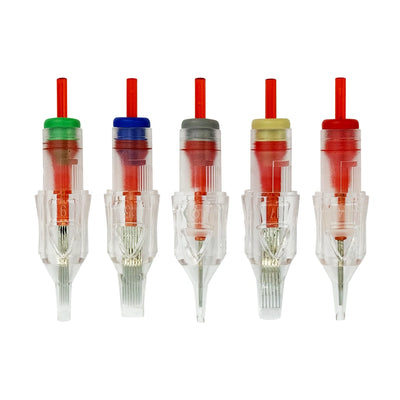
The current Magnum Gen 2 cartridge range uses a universal cartridge connection, allowing the range to be used with compatible rotary machines and grips. This means an artist can switch between a Round Liner, Round Shader, Curved Magnum, Straight Magnum or Whip Shading Magnum without needing a completely different machine. Always check the manufacturer's machine specifications before assuming compatibility.
Ready to find the perfect setup for your work? Read our Complete Magnum Gen 2 Cartridges Buyer's Guide for a full breakdown of sizes, tapers, and specs.
Matching Your Machine to Your Tattoo Style
Your tattoo style should influence the machine you choose, but it should not be the only consideration.
- Fine Line: For fine line work, prioritise control, comfortable handling and a machine response that suits your hand speed. A shorter or adjustable stroke can be useful, particularly when you want to work with small liner configurations.
- Black and Grey: Black and grey artists often prioritise smooth, controlled movement and a machine that feels comfortable during long shading sessions. The Bishop Power Wand 3.5 Shader is an example of a machine specifically configured around a 3.5 mm stroke and positioned for smooth black and grey work, fine lines and soft shading.
- Traditional: Traditional artists often want a responsive machine capable of producing confident lines and efficient saturation. A longer stroke may suit some artists, particularly when combined with larger liner configurations, although individual technique remains the deciding factor.
- Colour packing: Colour packing requires a machine that can maintain consistent needle movement with the chosen grouping. Artists who move between lining and colour packing may prefer adjustable-stroke machines or machines with a response that suits both applications.
- Realism: Realism often involves gradual shading, controlled transitions and long sessions. Comfort, balance and a machine response that complements your hand speed can therefore be particularly important.
Three Machines Worth Considering
The purpose of this section is not to declare a single "best" machine. Instead, these three examples illustrate different approaches to rotary machine design.
Dragonhawk/Mast Fold 2 Pro
The Fold 2 Pro is a useful example of an adjustable wireless pen. Its stroke can be changed from 2.4 mm to 4.2 mm, giving artists several mechanical settings within one machine. It uses an MCore-C1 motor, a 2,000 mAh battery and a colour display, with approximately 5 to 7 hours of working time listed by Magnum Tattoo Supplies.
This makes it particularly interesting for artists who value flexibility and want one machine capable of adapting to different techniques.
AVA EP7+
The AVA EP7+ takes a different approach, offering a pen-style wireless machine with 3.5 mm and 4.2 mm stroke options, a 2,200 mAh battery and the ability to operate wirelessly or through an RCA connection. Magnum's current listing gives approximately 5 to 8 hours of working time and a 4 to 12 V operating range.
It can be a practical option for artists who want wireless freedom while retaining the option of wired operation.
Bishop Power Wand
The Bishop Power Wand range is built around specific machine configurations rather than treating stroke adjustment as the primary feature.
The current Magnum listings include Advanced RCA versions such as the 3.5 mm Shader and 5.0 mm Liner, alongside a 4.2 mm Packer configuration. The 3.5 Shader is positioned towards smooth black and grey work, fine lines and soft shading, while the 5.0 Liner is designed for clean, solid lines, dotwork and blackwork.
This approach can suit artists who prefer choosing a machine configuration that closely matches their primary technique.
Comparing the Three Approaches
|
Machine |
Stroke Approach |
Power |
Key Consideration |
Suited To |
|
Dragonhawk/Mast Fold 2 Pro |
Adjustable 2.4–4.2 mm |
Wireless |
Broad adjustability |
Artists who switch between techniques |
|
AVA EP7+ |
3.5 / 4.2 mm options |
Wireless + RCA |
Flexible power options |
Versatile studio and wireless work |
|
Bishop Power Wand |
Dedicated 3.5, 4.2 or 5.0 mm configurations depending on model |
Wired or wireless depending on version |
Technique-specific configurations |
Artists who prefer a defined machine response |
The differences illustrate why there is no single machine specification that works for every artist.
How to Choose Your First Rotary Tattoo Machine
If you're buying your first rotary machine, avoid starting with the question: "Which machine is the best?"
Instead, ask: "Which machine characteristics match the way I intend to tattoo?"
Start with your primary tattoo style. Then consider how much flexibility you need. If you mainly perform one type of work, a machine with a dedicated stroke may be perfectly suitable. If you regularly move between lining, shading and colour packing, an adjustable-stroke machine may offer greater versatility.
Next, consider comfort. A machine can have excellent specifications on paper but still be unsuitable if the weight, grip or balance does not feel right in your hand.
Finally, consider your power setup. If you prefer maximum freedom of movement, wireless may be the obvious choice. If you want uninterrupted power and a straightforward studio setup, RCA operation may be preferable.
What About Voltage?
Voltage is another important part of machine setup, but there is no universal voltage that should be used for every machine, cartridge or technique. The correct operating range depends on the machine and manufacturer specifications, as well as the artist's setup.
For example, the Fold 2 Pro is listed with a 4 to 12 V operating range, while the AVA EP7+ is also listed around the 4 to 12 V range depending on the product specification.
Voltage should be treated as one part of the overall setup rather than a fixed setting for a particular tattoo style. Artists should establish their settings through appropriate professional practice and follow the machine manufacturer's guidance.
Machine Give and Response
Some rotary machines are designed with a degree of give in their mechanical system, while others provide a more direct response. “Give” can change how the needle responds when meeting resistance. A softer response may be preferred by artists who build gradients gradually, while a more direct response may appeal to artists who want a stronger, more immediate feel.
Neither is universally better. When comparing machines, pay attention to how the manufacturer describes the motor and mechanical system, but also consider how the machine's response fits your existing technique.
Maintenance and Hygiene
A professional tattoo machine should be maintained according to the manufacturer's instructions. Rotary machines generally have fewer mechanical components than traditional coil machines, but that does not mean they are maintenance-free.
Good practice includes keeping the machine appropriately protected during tattooing, cleaning it according to manufacturer instructions and using compatible barrier protection. Cartridge systems with safety membranes can help reduce the risk of fluids travelling back towards the machine, but they do not replace appropriate studio hygiene procedures. Never assume that a membrane makes a machine or cartridge setup self-cleaning.
Average Price of Rotary Tattoo Machines in the UK
The price of a rotary tattoo machine can vary considerably depending on the machine's construction, motor, drive system, power options and features such as wireless operation. Rather than choosing a machine based purely on price, it is worth considering how the specification fits your tattooing style and how frequently you use the machine.
For buying-guide purposes, these price bands provide a useful way to compare the range of rotary tattoo machines available in the UK:
|
Price Range |
Typical Machine Level |
What You Can Expect |
|
Under £150 |
Entry-level |
Suitable for artists looking for a more affordable way to enter rotary tattooing |
|
£150–£300 |
Mid-range |
Greater choice of professional features, construction and performance |
|
£300–£500 |
Professional |
Higher-end machines designed for demanding studio use |
|
£500+ |
Premium |
Advanced professional machines, premium construction and specialised features |
Prices can change depending on the model, configuration, promotions and whether additional batteries or accessories are included. For that reason, treat these ranges as a general buying guide rather than fixed pricing and check the current product listing before purchasing.
What Should You Spend on a Rotary Tattoo Machine?
There is no single price that guarantees the right machine. An apprentice may prioritise affordability and versatility, while an established artist completing long sessions may place greater value on weight, ergonomics, motor response and battery performance.
The most important question is therefore not "What is the most expensive machine I can afford?" but "Which machine gives me the features I actually need for the way I tattoo?"
Common Buying Mistakes
Choosing a rotary tattoo machine is about more than comparing specifications or selecting the most popular model. A machine that works exceptionally well for one artist may not suit another, so it is important to consider how each feature fits your technique, comfort and day-to-day workflow. Before making a purchase, watch out for these common mistakes:
- Choosing Based on Price Alone: A lower-priced machine is not necessarily the best value, while a premium machine is not automatically the right choice, and the most expensive machine is not necessarily the best choice. Consider how the machine fits your actual workflow.
- Focusing Only on Stroke: Stroke is important, but it is only one part of machine performance. Motor response, weight, balance, grip, power system and cartridge compatibility all matter.
- Ignoring Weight: A machine that feels comfortable for a short test may feel very different after several hours. Think about the length of your normal sessions.
- Buying Wireless Without Considering Batteries: Wireless freedom is useful, but battery management becomes part of your workflow. Check runtime, charging time and spare battery availability before buying.
- Assuming All Rotary Machines Feel the Same: Two machines with the same nominal stroke can still feel different because of differences in motors, drive systems, weight and mechanical design.
- Choosing a Machine Before Understanding Your Technique: Your machine should support your technique rather than forcing you to adapt unnecessarily.
How Many Rotary Tattoo Machines Do You Need?
There is no fixed number. An artist who works across multiple styles may eventually prefer different machines or stroke configurations for different applications. Another artist may prefer one highly versatile machine.
For an apprentice or artist building a first professional setup, starting with one reliable machine can be more practical than purchasing several machines before understanding which characteristics actually suit your hand. As your tattooing develops, your equipment can develop with it.
Building a Complete Rotary Setup
A machine is only one part of a working tattoo setup. Depending on your workflow, you may also need:
- Compatible cartridge grips
- Tattoo cartridges
- Power supply or wireless batteries
- RCA cables where required
- Machine covers and barrier protection
- Appropriate tattoo inks
- Practice skin for testing setups
- Studio hygiene and disposal supplies
The machine, cartridge and power system should be considered together. For example, if you primarily use cartridge needles and switch frequently between lining and shading, universal cartridge compatibility and an easily adjustable machine can simplify your workflow.
Quick Buying Summary
If you're choosing a rotary tattoo machine, use this checklist before purchasing:
|
If You Need... |
Prioritise... |
|
One machine for multiple techniques |
Adjustable stroke |
|
Fine line and detail |
Controlled response, comfortable grip and suitable stroke |
|
Black and grey |
Smooth response, balance and long-session comfort |
|
Traditional lining |
Responsive machine and suitable longer-stroke configuration |
|
Colour packing |
Consistent motor performance and appropriate machine response |
|
Wireless freedom |
Battery life, spare batteries and charging options |
|
Wired reliability |
RCA compatibility and a suitable power supply |
|
Maximum comfort |
Weight, balance and grip diameter |
|
Easy cartridge changes |
Universal cartridge compatibility |
|
A dedicated machine feel |
Fixed stroke matched to your primary technique |
Three practical approaches
For maximum adjustability: consider a machine such as the Dragonhawk/Mast Fold 2 Pro, which offers multiple stroke settings from 2.4 mm to 4.2 mm.
For wireless flexibility with RCA capability: the AVA EP7+ combines wireless operation with an RCA option and 3.5 mm or 4.2 mm stroke configurations.
For dedicated machine configurations: the Bishop Power Wand range provides specific options such as the 3.5 mm Shader, 4.2 mm Packer and 5.0 mm Liner, allowing artists to select a machine based on their primary technique.
Browse the full Magnum rotary tattoo machine collection to compare the wider range of machines, specifications and configurations currently available.
Conclusion
Choosing a rotary tattoo machine is ultimately about matching the machine to the artist. Stroke length, motor response, weight, balance, grip design, power options and cartridge compatibility all influence how a machine behaves in your hand. The right combination can make long sessions more comfortable and give you the response you need for your preferred techniques. There is no single rotary machine that is perfect for every tattooist. An artist specialising in black and grey realism may prioritise a different machine response from an artist producing bold traditional work, while someone working across several styles may benefit from adjustable stroke technology.
The Dragonhawk/Mast Fold 2 Pro, AVA EP7+ and Bishop Power Wand illustrate three different approaches to rotary machine design. The Fold 2 Pro prioritises adjustability, the AVA EP7+ combines wireless operation with flexible stroke options and RCA capability, while the Bishop Power Wand offers dedicated configurations designed around particular working styles. The best choice is therefore not necessarily the machine with the longest stroke, highest RPM or largest feature list. It is the machine that feels natural in your hand, complements your technique and gives you the control you need to produce your best work.
Looking for a rotary tattoo machine? Browse the full range of rotary tattoo machines available from Magnum Tattoo Supplies, including pen-style, wireless and professional rotary options.
Frequently Asked Questions
1. What is a rotary tattoo machine?
A rotary tattoo machine uses an electric motor and mechanical drive system to move the tattoo needle, rather than electromagnetic coils.
2. Are rotary machines better than coil machines?
Neither is universally better. Rotary machines are valued for smooth operation and versatility, while coil machines provide a distinctive mechanical response preferred by some artists.
3. What stroke length is best for tattooing?
There is no universal best stroke length. Shorter strokes are often used for controlled shading, while longer strokes can provide a more pronounced response for lining and saturation, depending on the machine and artist's technique.
4. Is an adjustable-stroke machine worth buying?
An adjustable-stroke machine can be useful for artists who switch between lining, shading and colour packing and want different machine responses from one device.
5. What is the difference between stroke length and needle depth?
Stroke length is the mechanical travel of the machine, while needle depth or protrusion refers to how far the needle extends from the cartridge.
6. Are wireless tattoo machines reliable?
A quality wireless machine can provide dependable performance, but battery life, charging time, and spare battery availability should be considered before purchase.
7. How long does a wireless tattoo machine battery last?
Runtime varies by machine, settings and working conditions. For example, current Magnum listings give approximately 5 to 7 hours for the Fold 2 Pro and 5 to 8 hours for the AVA EP7+.
8. Can rotary tattoo machines use cartridge needles?
Yes. Most modern pen-style rotary tattoo machines are designed around cartridge systems, although compatibility should always be checked for the specific machine.
9. What rotary machine is best for fine line tattooing?
Look for a machine with a controlled response, comfortable grip and stroke characteristics that suit your hand speed and preferred liner configurations.
10. What rotary machine is best for black and grey?
A machine offering smooth, controlled movement and good long-session ergonomics can be well suited to black and grey, with the ideal stroke depending on the artist's technique.
11. Is a longer stroke better for lining?
A longer stroke can provide a more pronounced response that some artists prefer for lining, but technique and machine setup are equally important.
12. Should I choose a fixed or adjustable stroke?
Choose a fixed stroke if you prefer a specific, consistent machine response. Choose adjustable stroke if you want one machine to cover several working styles.
13. Does machine weight matter?
Yes. Weight and balance influence comfort and control, particularly during long tattoo sessions.
14. Can I use the same rotary machine for lining and shading?
Yes. Many rotary machines can be used for both lining and shading, particularly when paired with suitable cartridge configurations and appropriate machine settings.
15. How do I choose the right rotary tattoo machine?
Start with your tattoo style and technique, then compare stroke, motor response, weight, balance, grip, power system, battery requirements and cartridge compatibility.
16. What is the best rotary tattoo machine for beginners?
There is no single best machine for every beginner. A versatile machine with a comfortable grip, predictable response and a stroke suited to your intended work can be a practical starting point.
17. What is the best rotary tattoo machine for colour packing?
Artists producing heavy colour packing often prefer a machine with a stronger, more pronounced response, but the ideal setup depends on stroke, motor behaviour, needle grouping and technique.
18. Are all rotary tattoo machines compatible with the same cartridges?
No. Many modern pen-style machines use universal cartridge systems, but compatibility should always be confirmed against the machine manufacturer's specifications.
Shop product