Ink
Ink


 Machines


 Cartridges


 Studio supplies


 Power & batteries


 Aftercare


 Traditional tattooing


 Apprentice


 Piercing & jewellery


 PMU supplies


 New arrivals
 Sale
Sale
 Gift vouchers
 Shop all


 March 12, 2026
-
7 months ago
March 12, 2026
-
7 months ago
If you run a tattoo studio in the UK, hygiene is not just a matter of best practice. It is a legal requirement.
UK tattoo studio hygiene regulations exist to protect both your clients and your team. Fail to follow them, and you risk enforcement action, studio closure, and lasting damage to your reputation.
This guide breaks down exactly what the law expects from you, from licensing and registration to inspections and daily sanitation procedures.
Core Ideas at a Glance
- All UK tattoo studios must register with their local authority before operating.
- Hygiene standards are enforced by Environmental Health Officers (EHOs).
- Studios must maintain sterile environments and use single-use equipment wherever possible.
- Regular inspections check everything from handwashing facilities to waste disposal.
- Non-compliance can lead to fines, suspension of registration, or studio closure.
- Tattoo hygiene products used daily, including soaps, gloves, and barrier film, are part of your compliance toolkit.
Why UK Tattoo Studio Hygiene Regulations Exist
Tattooing breaks the skin. That simple fact puts studios firmly within the scope of public health law.
Without proper infection prevention and sanitation procedures, the risk of transmitting bloodborne pathogens, bacterial infections, or skin conditions is real and serious.
UK tattoo studio hygiene regulations are designed to create a framework where clients can trust that every studio meets a minimum standard of safety. That framework covers everything from how you prepare the skin before tattooing to how you dispose of sharps after the session.
Understanding the Current Legal Framework
Tattoo studio regulation in the UK sits under several pieces of legislation. The Local Government (Miscellaneous Provisions) Act 1982 is the primary statute that requires registration and sets baseline standards.
Individual local councils then apply their own by-laws on top of this, which is why requirements can vary slightly across England, Wales, Scotland, and Northern Ireland.
The Health and Safety at Work Act 1974 also applies, as does the Control of Substances Hazardous to Health (COSHH) Regulations 2002, which covers your handling of chemical products. Staying current with your local authority guidance is essential.
Tattoo Studio Licensing and Legal Registration in the UK
Every tattoo studio in the UK must be registered with its local authority before it operates. This is a non-negotiable legal requirement, not an optional step.
Getting this right from the start protects your business, your clients, and your professional reputation.
Tattoo Studio Licensing Requirements
Licensing covers not just your premises but also the individual practitioners working within them. Some councils require each tattooist to register separately.
Regulatory compliance at this level means keeping records up to date whenever staff change or your studio moves.
How to Get a Tattoo Studio License in the UK
To get a tattoo studio license in the UK, you apply directly to your local council. The process generally involves completing an application form, paying a registration fee, and undergoing a premises inspection.
You may need to provide evidence of relevant qualifications or training, particularly around bloodborne pathogens, first aid, and health and safety. Check your council's website for the specific process in your area.
Do Tattoo Studios Need to Be Registered in the UK?
Yes. All tattoo studios must be registered in the UK. It is not optional. This applies whether you operate a large studio, a solo space, or a home-based setup.
Failure to register is a criminal offence under the Local Government (Miscellaneous Provisions) Act 1982. Unregistered premises can face immediate closure notices.
Tattoo Hygiene Standards and Compliance Rules
UK tattoo studio hygiene regulations set clear expectations for how you operate day to day. Meeting these standards consistently is what separates a professional studio from one that puts clients at risk.
The following core standards apply across all registered studios as part of infection-prevention requirements.
Core Hygiene Standards for UK Tattoo Studios
- Work surfaces must be non-porous, smooth, and cleaned between every client.
- Single-use needles and cartridges must be used for every procedure and disposed of in approved sharps containers.
- Ink must be dispensed into single-use ink caps.
- Artists must wash their hands before and after each client, and wear fresh gloves for every session.
- All reusable equipment that contacts skin or bodily fluids must be autoclave-sterilised before reuse.
- Waste must be segregated into clinical, sharps, and general waste streams.
Using a Tattoo Studio Compliance Checklist
A tattoo studio compliance checklist helps you stay audit-ready. Environmental Health Officers will often expect to see written procedures and evidence that you consistently follow them.
At a minimum, your checklist should cover daily surface-cleaning and disinfection logs, glove and consumables stock checks, autoclave cycle records, sharps waste-disposal records, and client consultation documentation.
Regulatory compliance is not just about what you do on inspection day. It is about what you do every day.
Maintaining Professional Studio Standards
Professional tattoo studio standards go beyond the legal minimum. The studios that consistently score well in inspections are the ones where hygiene is built into the culture of the space.
Investing in quality tattoo hygiene products plays a direct role. The right soaps, gloves, barrier products, and aftercare ranges make it easier to meet public health standards without disrupting workflow.
Products That Support Your Studio Hygiene
Having the right supplies available means compliance becomes second nature. These products from Magnum Tattoo Supplies are stocked specifically for professional studio use.
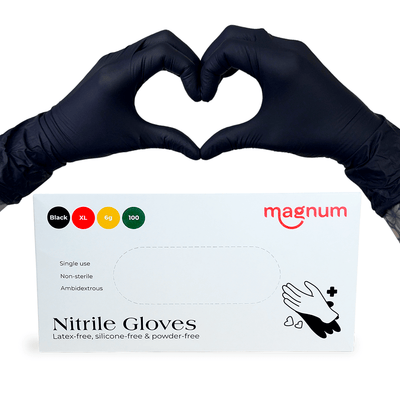
Magnum Black Nitrile Gloves (Box of 100 or Case of 10 Boxes)
Strong, reliable black nitrile gloves built for tattoo artists. Thicker than most standard nitrile options, latex-free, silicone-free, and powder-free, they are designed to remain intact during long sessions without tearing or thinning. Each box contains 100 gloves and is available individually or as a case of ten boxes for studios buying in volume.
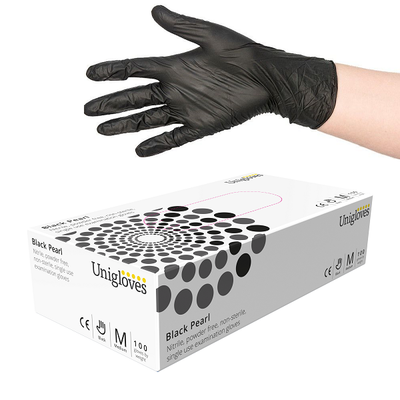
Unigloves Black Pearl Nitrile Gloves
Produced specifically for the tattoo industry, these gloves offer exceptional resistance against cuts, tears, and abrasions. Powder-free and latex-free, they minimise the risk of contamination and allergic reactions for both artist and client. A premium option for studios that want reliable performance throughout every session.
Local Authority Regulations and Environmental Health Oversight
Your local council is the licensing authority responsible for issuing registrations, conducting inspections, and taking enforcement action where standards are not met.
Understanding how this oversight works helps you stay prepared and avoid any surprises during an inspection.
Environmental Health Requirements for Tattoo Studios
Tattoo studio environmental health requirements focus on five core areas: structural hygiene, equipment sterilisation, personal hygiene, waste management, and client safety procedures.
EHOs are trained to assess all of these on inspection. Public health standards in this area are informed by guidance from the UK Health Security Agency and local council by-laws.
What Happens During a Tattoo Studio Inspection
During a tattoo studio inspection in the UK, an Environmental Health Officer will typically check registration paperwork and practitioner licenses, autoclave records and sterilisation logs, ink and needle storage and disposal, surface cleaning and disinfection procedures, staff training records, sharps disposal containers, and client consultation forms.
The inspector will want to see that you consistently maintain a sterile environment, not just when you know they are coming. Written evidence is your best defence.
Inspections may be routine after initial registration, reactive following a complaint, or unannounced. Higher-risk premises or those with a history of non-compliance will be inspected more frequently.
Health and Safety Practices in Professional Tattoo Studios
Under the Health and Safety at Work Act 1974, you have a duty to provide a safe working environment for both employees and clients.
It includes written risk assessments, clear COSHH data for any chemicals you use, and staff training on sanitation procedures and emergency procedures.
Handwashing and Sanitation Facilities
Your studio must have adequate handwashing facilities with warm running water, liquid soap, and disposable towels or a hand dryer. These must be accessible at all workstations.
A sink used only for handwashing, separate from any cleaning sink, is strongly recommended and in many cases required by local by-law.
Preventing Risks Through Proper Hygiene Practices
Infection prevention depends on consistency. A single lapse in hygiene practice can have serious consequences for your client and your business.
Some of the highest-risk moments include cross-contamination from touching non-sterile surfaces during the session, inadequate skin preparation before tattooing, and incorrect aftercare advice.
Barrier film, fresh gloves for every surface touch, and proper ink cap practices all significantly reduce these risks. Safety compliance is easier when your team understands the reason behind every protocol, not just the procedure itself.
Conclusion
UK tattoo studio hygiene regulations are comprehensive, but manageable when approached systematically. Registration with your local authority is non-negotiable.
Daily hygiene routines, proper waste management, and a sterilised working environment protect your clients, your team, and your business. As the industry continues to professionalise, the studios that lead are those treating compliance not as a burden but as a baseline.
If you are unsure where your studio currently stands, start with a self-audit using the checklist above, then contact your local Environmental Health department for guidance.
Magnum Tattoo Supplies stocks a wide range of tattoo hygiene products to support your studio's compliance, from professional soaps and gloves to barrier film and disposable supplies. Browse the hygiene and studio supplies collection at magnumtattoosupplies.co.uk.
FAQs
What are the hygiene requirements for a tattoo studio in the UK?
UK tattoo studios must maintain a sterile working environment, use single-use needles and ink caps, sterilise reusable equipment using an autoclave, provide adequate handwashing facilities, and follow proper clinical waste disposal procedures. Full requirements are set by your local council's Environmental Health department.
How do you get a tattoo studio license in the UK?
Apply directly to your local council's Environmental Health or licensing team. You will need to complete an application, pay a registration fee, and have your premises inspected. Some councils also require individual artists to register separately. Check your council's website for the process in your area.
Do tattoo studios need to be registered in the UK?
Yes. All tattoo studios must be registered under the Local Government (Miscellaneous Provisions) Act 1982. Operating without registration is a criminal offence. It applies to all setups, including home studios and sole traders.
What happens during a tattoo studio inspection in the UK?
An Environmental Health Officer will inspect your premises for compliance with sanitation procedures, sterilisation records, waste management, practitioner training, and client documentation. Failing to meet standards can result in formal notices, fines, or closure.
What health and safety rules must tattoo studios follow?
Studios must comply with the Health and Safety at Work Act 1974, COSHH Regulations 2002, and local by-laws. It includes written risk assessments, proper handling of chemical products, staff training in infection prevention, and the maintenance of safety compliance records across all studio operations.
Shop product