Ink
Ink


 Machines


 Cartridges


 Studio supplies


 Power & batteries


 Aftercare


 Traditional tattooing


 Apprentice


 Piercing & jewellery


 PMU supplies


 New arrivals
 Sale
Sale
 Gift vouchers
 Shop all


 March 06, 2026
-
7 months ago
March 06, 2026
-
7 months ago
Getting your supplies right is one of the most important decisions you'll make as a tattoo artist. Whether you're setting up for the first time or just taking stock of what you've got, the quality of your equipment feeds directly into the quality of your work and your reputation.
The UK tattoo industry has come a long way over the past decade or so. There are more artists, more studios, and more products on the market than ever before. That's a good thing, but it also means there's more to navigate. Not everything you'll find online meets the standards you should be working to.
This guide is here to help. It covers everything you'd expect: machines, needles, inks, hygiene, aftercare, written for working artists and studio owners who want straightforward, practical information without the filler.
Tattoo Machines: Finding the Right Fit for How You Work
Your machine is the tool you'll spend more time with than anything else. It makes sense to understand your options properly before committing to one or building out a full kit.
Most professional studios in the UK use rotary machines, coil machines, or a combination of both. The right choice depends on the kind of work you do and, honestly, personal preference.
Rotary Tattoo Machines
Rotary machines are driven by a small electric motor. They're quieter than coils, lighter in the hand, and noticeably easier to work with over a long session. Most modern rotary machines are cartridge-compatible, which makes switching between needle configurations quick and keeps the hygiene side of things straightforward.
They work particularly well for realism, fine line work, and colour. If you're helping an apprentice choose their first machine, a decent rotary is usually the sensible starting point. It's easier to build good technique with a tool that isn't fighting you.
Coil Tattoo Machines
Coil machines have been around for a long time, and plenty of experienced artists wouldn't swap them for anything. They run on electromagnetic coils, have a characteristic buzz, and give you a level of hands-on tuning that a lot of artists appreciate. You can adjust the speed and hit force to suit exactly what you're doing.
They're popular for traditional tattooing and black-and-grey work in particular. They do take a bit more getting used to, but once you've got a well-set-up liner and shader, they're a reliable combination that many artists stick with for years.
Power Supplies: Why This Isn't the Place to Cut Corners
A good power supply unit keeps your machine running consistently. Voltage that fluctuates, even slightly, affects how the needle moves and sits in the skin, and that shows in your lines and colour packing. It's not the most exciting purchase, but it matters.
Look for a unit with a clear digital display, stable output, and a foot pedal connection. If you run two machines at the same station, a dual-output unit is worth considering. Stick to reputable brands. Cheap, unbranded units can damage machines over time and are just not worth the hassle.
If you do conventions or guest spots, battery-powered wireless PSUs have come on a lot recently and are well worth looking at. The freedom to work without being tethered to a wall makes a real difference at busy events.
Tattoo Needles and Cartridges
Needles are one of those things that seem simple until you start looking into them. There are a lot of configurations, and understanding what each one does makes a real difference to how you work.
Cartridge Needles
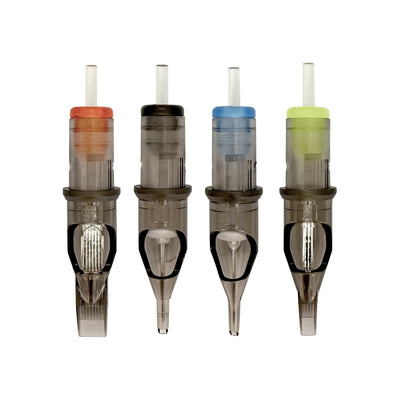
Cartridge needles have become the go-to for most professional artists. They slot straight into compatible grips and rotary machines, they're quick to change between clients, and because they're single-use and pre-sterilised, they keep your hygiene process clean and consistent.
The most common configurations you'll work with are round liners (RL), round shaders (RS), curved magnums (CM), straight magnums (M1), and flat (F) needles. Curved magnums are widely used for blending and shading larger areas. They sit gently on the skin and move smoothly. Straight magnums give a firmer feel and are a solid choice when you're packing colour or doing bold shading work.
Traditional Needle Bars
Needle bars are still used by artists working with coil machines and traditional tube-and-grip setups. They need proper handling. Always use single-use, pre-sterilised bars and make sure they go straight into a sharps container after every session. No exceptions.
Tattoo Inks: Quality and Safety Matter More Than Price
The ink you use affects how your work heals, how it holds up over time, and how your clients feel about the experience. Cheap inks can fade unevenly, sit poorly in the skin, or cause reactions. It's an area where buying well from the start saves you problems further down the line. At Magnum Tattoo Supplies, we stock Fusion Ink as one of our core professional options. It's well-regarded in the industry for its consistency and vibrancy, and it's used by professional artists across the UK and further afield.
Vegan and Cruelty-Free Inks
More clients are asking about this than ever before, and it's worth being ready for that conversation. Brands like Eternal and World Famous offer vegan formulas that are widely used in professional studios. Stocking them broadens who you can work with and shows your studio is keeping up with what clients care about, which can only be a good thing.
Hygiene and Sterilisation: Getting the Basics Right
There's no grey area here. Every professional tattoo studio in the UK has to meet the health and safety standards set by its local authority. Cutting corners on hygiene puts your clients at risk and your licence on the line. It's simply not worth it.
A properly stocked studio should have:
-
Disposable nitrile gloves are the standard in professional tattooing
-
Surface disinfectants and barrier film
-
An autoclave or verified single-use sterilised equipment
-
Sharps disposal containers
-
Green soap or a professional skin cleanser
-
Single-use ink caps and holder trays
If you're using reusable equipment like grip bodies or tube stems, they need to be autoclaved between every client. An ultrasonic cleaner before the autoclave cycle helps remove residue and makes the sterilisation process more effective.
What Should a Professional Tattoo Starter Kit Include?
If you're just starting or putting together a kit for an apprentice, it's worth thinking carefully about what goes in it. There are a lot of bundles out there from unknown sources, and most of them aren't up to scratch. Poorly calibrated machines and inks that don't meet professional standards are common in cheap kits.
A solid starter kit for a UK artist should cover:
-
A reliable rotary machine with adjustable stroke length
-
A digital power supply unit with a foot pedal
-
A selection of cartridge needles in common configurations, RL, RS, and CM, as a minimum
-
A cartridge grip and a compatible RCA or clip cord
-
A small range of professional inks
-
Nitrile gloves, ink caps, and core hygiene supplies
Buying through an established UK supplier means you know what you're getting: products that are fit for professional use and won't catch you out during an inspection.
Tattoo Aftercare: Part of the Service, Not an Afterthought
How a tattoo heals is as important to the client as how it looks when it's done. The aftercare products you recommend reflect on you as much as the tattoo itself does.
Stocking a solid range covers you for different client needs and gives you something worth recommending with confidence. Trusted options that work well for UK studios include:
-
Magnum Tattoo Balm, a professional-grade balm developed with working artists in mind
-
Butterluxe, clean formula, widely used and well-regarded
-
Dermalize Pro, a second-skin film for a covered healing approach
-
Biotat, a respected brand with a solid UK following
-
Skin Jungle is a good option for clients with sensitive skin
Giving clients clear written aftercare guidance alongside a product you trust makes a real difference to how they heal and how they feel about coming back.
Products Worth Adding to Your Order
Magnum Cartridge Needles
Cartridge needles are what most UK studios are running with these days, and for good reason. They're fast to change, hygienic, and available in every configuration you'd need. Magnum stocks a full professional range, round liners, round shaders, curved magnums, straight magnums, and more, all single-use and pre-sterilised.
Having the right cartridge for the job makes a real difference. Whether you're lining, shading, or blending, it's worth keeping a well-stocked selection to hand.
Magnum Tattoo Balm
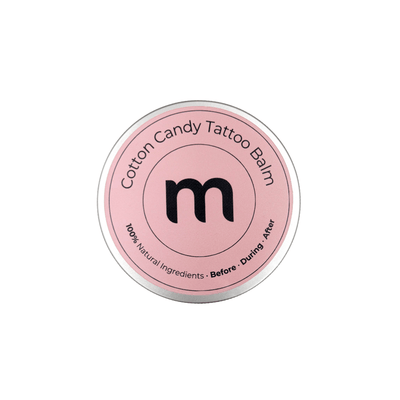
Magnum Tattoo Balm is a professional aftercare product that works well as a studio retail option or a direct recommendation to clients. It's developed with working artists in mind, so you can recommend it knowing it's been properly thought through.
Stocking it from the same supplier you use for your equipment keeps things simple, and it's a natural, low-pressure add-on that genuinely adds value to the client experience.
Where to Source Your Supplies in the UK
Where you buy from matters. A dedicated UK supplier means consistent stock, quicker delivery, and products that meet UK safety standards, without the uncertainty that comes with sourcing from less established places.
Ordering Online
Ordering from a professional online supplier is how most UK artists and studios keep their stock topped up. It's straightforward, you've got access to a full range, and you're not relying on what happens to be available locally.
Magnum Tattoo Supplies ships across the UK and carries a comprehensive range of professional equipment, inks, cartridges, and hygiene essentials. Whether you need a full kit build or just want to restock your consumables, it's all there.
Running a Multi-Artist Studio
When more than one artist is working from the same studio, having a consistent source for your supplies makes life considerably easier. Everyone's using the same cartridges, the same inks, the same hygiene products. Quality stays consistent, and ordering doesn't become a headache.
Magnum Tattoo Supplies supports studios of all sizes with a full professional product range available online with UK-wide delivery.
Starting as a Tattoo Artist in the UK
Getting into professional tattooing involves more than buying equipment. There are legal and regulatory requirements that need to be in place before you work with clients.
The key steps typically include:
-
Completing a formal apprenticeship under an experienced, licensed professional
-
Registering your studio or practice with your local council
-
Meeting infection control and hygiene requirements
-
Getting appropriate public liability insurance
-
Sourcing professional-grade equipment and inks that meet UK standards
Licensing requirements vary across England, Scotland, Wales, and Northern Ireland, so it's always worth checking directly with your local authority to confirm what's needed in your area.
Build Your Setup with Confidence
Good tattooing starts with good supplies. The machine in your hand, the ink on your shelf, the hygiene products at your station, all of it feeds into the work you produce and the experience your clients have.
Sourcing from a reputable UK supplier means you're working with products you can rely on, delivered when you need them, at a standard your clients deserve.
Magnum Tattoo Supplies carries a full professional range: machines, inks, cartridge needles, power supplies, hygiene essentials, and aftercare, all available online with UK-wide delivery. Whether you're kitting yourself out or supplying a whole team, we've got what you need.
Shop product